
Recently, a friend asked me about meditation. They wanted to know what I actually do when I meditate. This question inspired me to write an article sharing my own experiences with meditation. Today, I will explain how I meditate and I will provide some advice on how someone new to meditation can give it a go themselves.
Meditation has helped me through many stressful days where I felt like I had lost complete control of my thoughts. Meditation has served as a tool to help ground myself during times of distress. It also helps me practice being more mindful and present in my day to day life which has huge benefits in itself.
How Do I Meditate?
I have been meditating for nearly two years now. I’m not always consistent, but I aim to meditate daily for at least 5 to 10 minutes.
I started off using the Headspace app. Headspace is a fantastic tool for people new to meditation. It provides the user with guidance and advice on meditation and mindfulness. I would definitely recommend it to people looking at trying meditation for the first time. After using this app for a while I started to find the narration to become too distracting so now I prefer to find a comfortable spot with minimal distraction where I can just listen to the world around me.
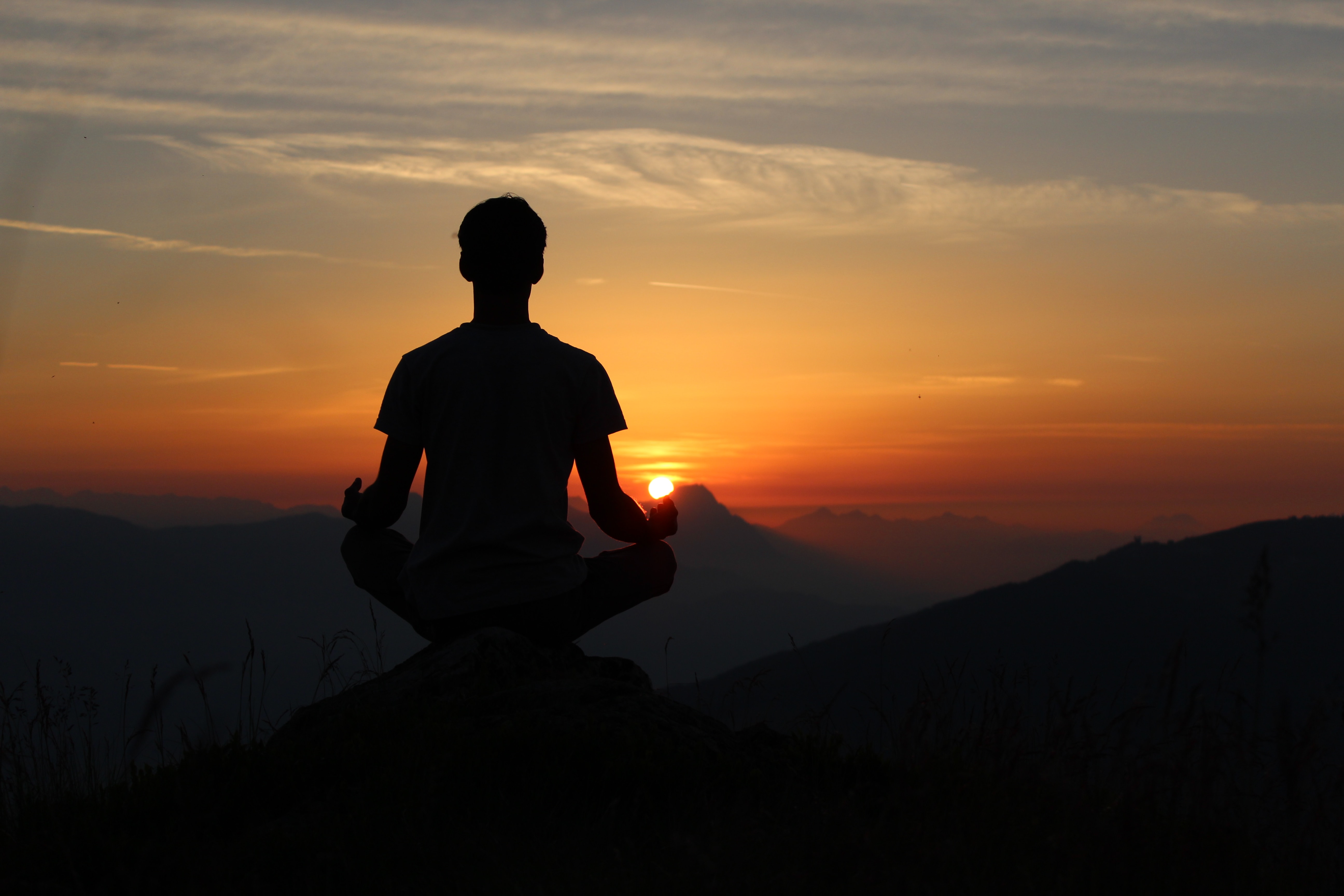
Finding a comfortable position is an important part in preparing for your meditation. There are no rules regarding positioning. You don’t need to sit on the floor, cross-legged like a monk. You just need to find a position which you feel comfortable sitting in for however long you plan to meditate for. I often switch between sitting on a chair or lying down on my bed.
Once I am in my position, I start by taking three deep breathes. In and out. Focusing on the lungs filling and emptying with air. I then gently close my eyes and feel the weight of my body sink into my surroundings. Then, I simply notice. I don’t try and think of anything in particular. I let thoughts and feelings come as they please. I notice them, then let them go. It’s harder than it sounds. After two years I still don’t consider myself to be very good at it. It takes a lot of practice and patience.
The Mind as a Blue Sky
A really good analogy which helped me understand the practice of meditation was to observe our mind as being like the sky. When we are in a state of complete calm, our mind could be seen to be a clear, blue sky. Thoughts may present themselves as clouds. This is normal. In meditation, we simply practice recognising these clouds and allow them to float on by without judgement.
Sometimes, when we feel out of control of our emotions, our sky may experience a thunderstorm with dark, gloomy clouds swirling around. I’ve experienced these feelings often with the stress of nursing school and other life events, just like everyone else has. It’s normal. Meditation provides me with the opportunity to recognise these thoughts, accept them, and be at peace with them. The storms can be daunting and feel like they are here to stay but remember that they will pass. When they do, that clear, blue sky will still be there.

How Do I Get Started?
If after reading this you feel like meditation could be something which helps you, then here are some tips on how you can get started.
SCHEDULE TIME TO MEDITATE
I have been most consistent with meditating when I have scheduled it in for the same time each day. Whether this be in the morning, evening or both. You are more likely to complete a task when you have scheduled it for a specific time.
START OFF SLOWLY THEN BUILD UP
Don’t try and meditate for an hour on your first go. Start of easy by simply trying to sit still for at least five minutes. From here you can build up gently to ten minutes or even longer. If you meditate for too long when first starting you will most likely lose focus easily and become frustrated.
USE AN APP FOR GUIDANCE
As I said before, Headspace is a fantastic app for beginners. There are plenty of other free apps out there such as Calm and Smiling Mind which can be really beneficial in teaching you the basics of meditation.
MAKE SURE YOU ARE COMFORTABLE AND FREE OF DISTRACTIONS
You’re not going to enjoy meditation if you’re not comfortable. Take time to find a comfortable position, but also make sure you’re wearing something comfy. Also try to make your environment as free from distractions as possible. Notifications off. Noise-cancelling headphones have done wonders for me.
BE PATIENT AND DON’T GIVE UP!
Meditation can actually be rather frustrating when first beginning which seems quite contradictory. You most likely will lose focus while meditating and sometimes you may feel like it is a complete waste of time. I encourage you to keep going for at least two weeks. Be kind to yourself when you become distracted. Simply recognise you have become distracted, then bring your focus back to the body. Practice makes perfect and after a while you may begin to see some benefits coming through.
If you have tried all these tips and you still feel like spending ten minutes doing nothing is completely pointless, that’s ok. Meditation may not be for everyone, but it’s certainly worth a go if you haven’t tried before. Just know that you can’t master meditation overnight. Also, if you can’t find the time to simply do nothing for five or ten minutes, then maybe you need to think about reorganising your timetable.
Thanks for reading! I hope that this article inspires you to give meditation a go. There’s no harm in trying! I’m also always open to any advice or further information regarding the topic from more experienced meditators.

 POTENTIAL